


The signs of alcohol dependence are well studied and are no secret.
We tried to briefly describe all the signs of alcohol dependence and answer basic questions.

How do you know if someone just likes to drink or if they are showing signs of alcohol dependence?Is there a line between drinking alcohol “recreationally” and alcohol dependence?
What are the signs of alcohol addiction?
- Craving for alcohol.This may be manifested by the emergence of motives for drinking that were not previously observed.In anticipation of a drink, the mood improves, the person becomes excited and full of enthusiasm.Stocks of beer, wine and vodka may appear at home.
- Everything related to the consumption of alcoholic beverages is zealously defended and defended.Alcoholic friends gain authority and respect.A list of excuses for his own drunkenness appears.Life values are changing, moral principles are being restructured.Criticality about someone's behavior disappears.
- Loss of control over the dose of alcohol.An alcoholic cannot limit his alcohol intake;he can't stop with small doses.As soon as he starts drinking, he drinks until the last drop (or until he loses consciousness).
- There is no vomiting when drinking large amounts of alcohol.The gag reflex is the body's defense against alcohol poisoning.In drunks, this reflex disappears.
- Changes in tolerance (susceptibility) to alcohol.In the first stages of alcoholism it grows (the person drinks a lot and does not get drunk), over time it drops, and the alcoholic becomes drunk with smaller doses of strong drinks.
- Drink regularly.It is believed that if a person rarely drinks, then he is not an alcoholic.However, regular consumption of beer, wine, brandy or vodka, even once a week, is already a cause for concern.If this happens more frequently, we can talk about alcoholism.
How to identify signs of alcohol dependence in yourself?
- Try to answer some questions honestly.
- Have you started drinking more frequently?Drinking alone?Do you secretly drink from everyone?
- Are you excited about the upcoming holidays or weekends where you can drink alcohol?
- Does your character change when you are sober and drunk (you can ask your relatives and friends)?
- Do cases of disorientation in time and space occur during alcohol consumption?Do you have memory lapses in the morning after a feast?
- Have you ever had withdrawal symptoms?
- Does the thought of having to give up alcohol make you angry?
- Can you reduce the amount you drink?
- Have you ever had a binge?
- Have you ever had problems at home or at work because of drinking?
- Has your appearance changed recently?Do you take care of your clothes, your hairstyle, your appearance?
- Are you worried about your heart, liver, stomach?
Positive answers to the above questions are a sign that you need to seriously think about solving the problem of alcoholism.
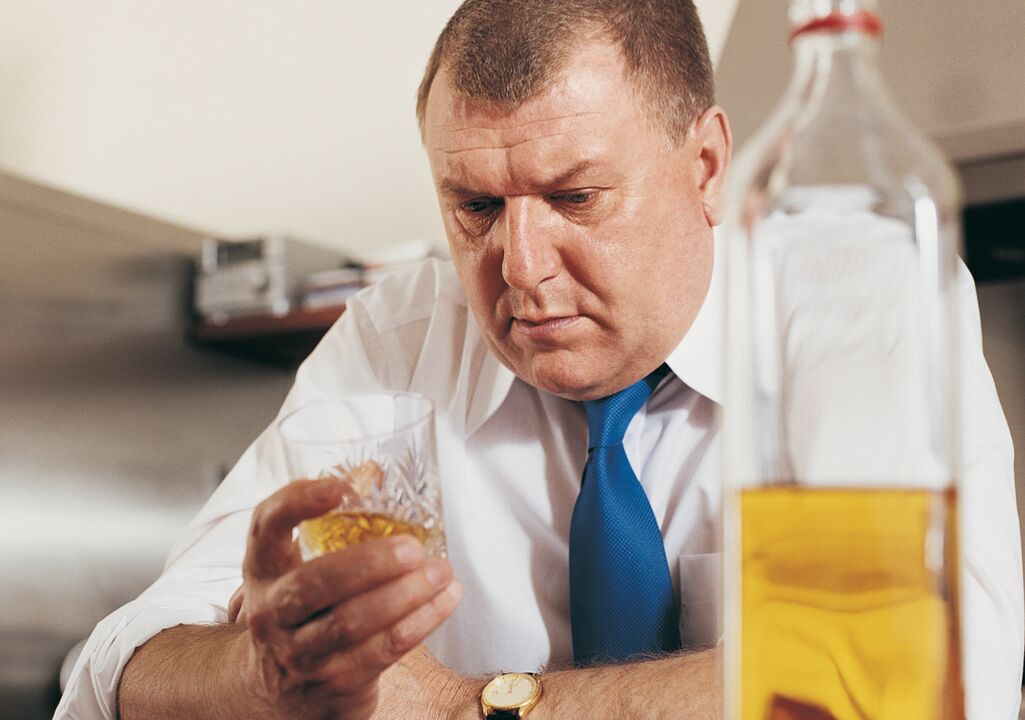
Reasons for drinking alcohol
You've probably heard the expression more than once: “let's have a drink and warm up”.It is believed in everyday life that alcohol is a good way to warm up the body.No wonder alcohol is often called “hard drinks”.Doctors, on the contrary, believe that a patient with an ulcer should absolutely not drink alcohol.Where is the truth?After all, small doses of alcohol greatly stimulate the appetite.Or another popular belief among people: alcohol excites, invigorates, improves mood, well-being, makes the conversation more lively and interesting, which is important for a group of young people.It is no surprise that alcohol is consumed “against tiredness”, in moments of feeling unwell and at almost all celebrations.One of the congresses of doctors adopted a resolution on the dangers of alcohol: "... there is not a single organ of the human body that is not subject to the destructive effects of alcohol; alcohol does not have any effect that cannot be achieved by another medicinal agent that acts more usefully, safely and reliably; there is no such painful condition in which it is necessary to prescribe alcohol for a long time."Therefore, talking about the benefits of alcohol is a fairly common misconception.Take, for example, the obvious fact - the stimulation of appetite after a glass of vodka or wine.But this is for a short time, while the alcohol causes the “ignition juice”.In the future, drinking alcohol, including beer, will only harm digestion.
Alcohol
Alcohol paralyzes the action of important organs such as the liver and pancreas.The need for alcohol is not one of the natural needs of human life, like the need for oxygen or food, and therefore alcohol itself does not have a motivating force for a person.This need, like some other human “needs” (for example, smoking) arises because society, firstly, produces this product and, secondly, “reproduces” the customs, forms, habits and prejudices associated with its consumption.Of course, these habits are not inherent in everyone to the same extent.
The effect of alcohol on the human body
Alcohol from the stomach enters the bloodstream two minutes after consumption.The blood carries it to every cell in the body.The cells of the cerebral hemispheres are mainly affected.A person's conditioned reflex activity worsens, the formation of complex movements slows down, and the ratio of excitation and inhibition processes in the central nervous system changes.Under the influence of alcohol, voluntary movements are impaired and the person loses the ability to control themselves.
The effect of alcohol on the nervous system
Signs of alcohol dependence begin to form due to the peculiarities of its effect on the nervous system.The penetration of alcohol into the cells of the frontal lobe of the cortex releases a person's emotions, unjustified joy, stupid laughter and ease of judgment appear.After an increase in excitation in the cerebral cortex, there is a sharp weakening of inhibition processes.The cortex no longer controls the functioning of the lower parts of the brain.The person loses moderation, modesty, says and does things that they would never say or do if they were sober.Each new portion of alcohol increasingly paralyzes the higher nervous centers, as if connecting them and not allowing them to interfere with the activity of the lower parts of the brain: the coordination of movements is disturbed, for example, the movement of the eyes (objects begin to bend), and an awkward, staggering gait appears.Disruption of the nervous system and internal organs is observed with any alcohol consumption: single, episodic and systematic.
Where does drunkenness begin?
The need for alcohol is not one of the natural needs of human life, like the need for water or food, and therefore alcohol itself does not have a motivating force for a person.So what is the reason to drink alcohol?
Before the age of 11, the first contact with alcohol occurs by chance, or is given “for appetite”, “treated” with wine, or the child himself tries alcohol out of curiosity (a reason characteristic mainly of boys).At an older age, traditional reasons become the reasons for drinking alcohol for the first time: “holidays”, “family celebration”, “guests”, etc.
From the age of 14 to 15, reasons arise such as “it was inconvenient to be left behind the boys”, “my friends convinced me”, “for the company”, “for courage”, etc.Boys are characterized by all these groups of reasons for their first contact with alcohol.For girls, the second “traditional” group of motives is mostly typical.Usually this happens, so to speak, with an “innocent” drink in honor of a birthday or other celebration.And although this happens with the consent of the parents, in the family circle it is still dangerous to introduce wine to children.After all, by touching alcohol, the psychological barrier is removed and the teenager considers himself entitled to drink with friends or even alone, if this opportunity arises.It is not for nothing that people say: “rivers begin with a stream, and drunkenness begins with a glass”.
Alcohol is a common topic for people who are unfamiliar with it.A company has gathered, everyone is a little embarrassed.They drank - you see, they are already laughing, dancing, getting to know each other, having fun.Gradually, alcohol becomes an indispensable attribute of communication.Alcohol quickly and easily creates the illusion of psychological security and problem-free existence.The person becomes accustomed to this illusory way of solving problems and increasingly turns from real actions to taking refuge in the alcoholic haze.
Where is the line?
An alcoholic is a person who suffers from alcoholism.Before the disease develops, there is usually a more or less prolonged period of episodic alcohol use.This period in medicine is called the period of alcoholization.The onset of the disease is considered to be the transition to daily and systematic alcohol consumption.The answers to the questions below will help you determine the degree of predisposition to alcoholism.Try to answer them honestly.
- Have I tried limiting my alcohol consumption several times?
- Do I feel remorseful about drinking?
- Do I drink alcohol in the morning to relieve a hangover?
- Do I have difficulty tolerating criticism from my co-workers and loved ones about my alcohol consumption?
If you answered yes to at least two questions, you are at risk and should take appropriate action as soon as possible.
Signs of alcohol dependence is a disease
There is a reasonable question that is easy to ask when looking at an alcohol-dependent person from the outside: "If you have signs of alcohol dependence and a problem with alcohol, then why don't you stop drinking? Stop - that's all."The obvious first answer: “There is no willpower” is incorrect.Not only weak-willed people suffer from alcoholism and cannot stop, but also those who achieve success, know how to face problems and know how to win.The point is not that the will is weak, but that the enemy is strong.Alcoholism is a serious chronic disease, in most cases difficult to cure.It develops on the basis of regular and prolonged use of alcohol and is characterized by a special pathological state of the body: an uncontrollable craving for alcohol, a change in the degree of tolerance and degradation of the personality.Alcoholism develops according to this pattern:
Initial phase: intoxication with memory loss, “eclipse”.A person constantly thinks about alcohol, it seems to him that he has not drunk enough, drinks for future use and develops greed for alcohol.However, he remains aware of his guilt and avoids talking about his desire for alcohol.
Critical phase: loss of self-control after the first sip of alcohol.The desire to find an excuse to drink, resistance to all attempts to stop the desire to drink.A person develops arrogance and aggressiveness.He blames others for his problems.He starts drinking and random friends become his friends.He is forced to leave his permanent job and loses interest in everything that has nothing to do with alcohol.
Chronic phase: daily hangover, personality disintegration, memory loss, confusion of thinking.A person drinks alcohol substitutes, technical liquids and cologne.He develops unfounded fears, delirium tremens and other alcoholic psychoses.One of the characteristic complications of excessive alcohol consumption is delirium tremens.Delirium tremens is the most common alcoholic psychosis.It usually occurs in a state of hangover, when the drunk person develops inexplicable fear, insomnia, hand tremors, nightmares (persecutions, attacks, etc.), auditory and visual deceptions in the form of noises, bells and movement of shadows.The symptoms of delirium tremens are especially pronounced at night.The patient begins to experience vivid experiences of a frightening nature.Regarding the Drunkard, for example, it seems that there is a conspiracy against him.Seeing no way out of this situation, he may commit suicide.
Alcohol and people

Signs of alcohol dependence and the effects of alcohol on a person are immediately noticeable.And if you ask people who drink how often they drink, most will say not regularly.However, even after drinking once, people have a restless night and wake up in the morning devastated, with a swollen face and a headache.The working day, as a rule, ends up being ruined, and if a person's work is associated with machines, for example, with a machine tool or a car, consider that on this day he is at a much greater risk of an accident or even a catastrophe.For mental workers, after consuming alcohol, their thought processes are significantly impaired, the speed and accuracy of calculations decrease and, as they say, their work is taken out of their hands.Thus, even after irregular and accidental alcohol consumption, serious problems occur in the body, indicating serious poisoning.If the use of alcohol becomes systematic, the person drinks on any occasion, looking for some reason to get drunk, then this is called domestic drunkenness.For a drunkard, the meaning of the festive event does not matter;he doesn't care if others approve of his behavior.At this stage of alcohol initiation, the drinker's attitude towards others, towards generally accepted and acceptable norms of behavior changes significantly.Signs of alcohol dependence are actively forming.For a drunk, his closest people are his drinking buddies, even if it's the first time they've met at the same table.The time, place and environment in which people drink become less important.Thus, the difference between drinking occasionally and getting drunk lies not only in the quantity consumed at once, but also in the psychological attitude of the drinker.In the first case, the person celebrates some solemn or significant event and, in the second, he drinks just to get drunk.If you prevent a person from drinking in time, it prevents them from falling and developing alcoholism.
What does it mean to have a chronic illness?
This means that the signs of alcohol dependence and the changes in metabolism that systematic alcohol consumption brings to the body are difficult to reversible.Those ones.For the rest of your life, the body remains “ready” to recover the entire situation at the first ingestion of alcohol into the body.Signs of alcohol dependence return quickly, even if this happens many years and even decades after you stop drinking alcohol.
Can alcoholism be cured?
Yes and no.No – in the aspect that it will never be possible to resume “cultural drinking”.The brain's metabolic processes are disturbed and the normal reaction to alcohol will never be restored.Any consumption of alcohol will inevitably lead to a breakdown, either immediately or some time later.If metabolic disorders occur, consider that your barrel or tank is drunk.Even many years of abstinence do not allow you to count on the fact that “the body has been cleansed” and you will be able to drink culturally.
Yes - in the sense that even with severe alcoholism, complete and indefinitely long abstinence from alcohol is possible.A person is not just a physical body.And your psyche does not just consist of what the illness has brought, but contains untapped resources.Man is characterized by higher moral feelings - love, desire for beauty and harmony.After carrying out long and difficult work on oneself (with help, of course), developing psychologically and spiritually, a person is able to change his attitude towards alcohol and abandon it forever.But, of course, we can only talk about absolute sobriety.To drink or not to drink – alcoholism leaves no third option.With your unwavering determination for medical help, even seriously ill patients can achieve amazing results.
What to do if the patient does not agree to be treated?
If there are signs of alcohol dependence, it is essential to make constant attempts to convince the patient of the need for therapy.It requires the joint effort of all interested and significant people for the patient (family, friends, spouses, employees, teachers, etc.).There is a specially designed method to encourage an alcoholic to seek help, which is called “intervention.”Each of the intervention participants (parents, spouse, child, boss) tries to help the patient realize the presence of a problem, reporting the changes in it and the changes in their lives caused by alcohol consumption.When the desired result is achieved, they offer a solution - treatment in a specific medical institution, a rehabilitation program.This method often requires the participation of a psychotherapist to coordinate and measure the efforts of the actors.
Is it possible to treat a patient without their consent?
In our country, assistance to patients with alcoholism is regulated by the Law of our country “On psychiatric assistance to the population and the rights of citizens in its provision”.According to the law, the treatment of a patient with drug addiction, substance abuse or alcoholism is carried out on the basis of his voluntary consent.Treatment without the patient's consent is only carried out by court order, when the citizen is held criminally responsible.
As mentioned earlier, alcoholism is a disease and, like any disease, requires complete and long-term treatment.Appealing to dubious “specialists” who treat alcoholism “by photography”, “without the patient's knowledge”, firstly, is a waste of time and, secondly, it instills in the patient the belief in the incurability of this disease.
What does helping a patient overcome involve?
This assistance consists of several steps.Firstly, the patient needs help during the “withdrawal” period.This problem is usually resolved by doctors, preferably through drug treatment or in a psychiatric hospital.After 5-10 days, the so-called post-withdrawal period begins, which lasts up to 1.5 months.There are two approaches to managing patients at this stage.
The first involves continuing the patient's drug treatment to stabilize his physical and mental condition: improving mood, restoring sleep, mitigating the severity of alcohol cravings (so-called cravings) and correcting behavioral disorders.It is recommended that during this period the patient is isolated from their usual environment and in a hospital environment.
Another approach to patient management in the post-abstinence period has a psychotherapeutic focus and involves immediately including the patient in one or another rehabilitation program with psychotherapeutic management, also in a hospital setting or rehabilitation center.
The third stage is rehabilitation.It usually occurs on an outpatient basis.Patients continue to work on the chosen program, attending psychotherapeutic groups or self-help groups.The goal of rehabilitation is to teach the patient with alcoholism how to live without alcohol.
Is it possible to stop drinking at home?
It is preferable to treat the patient in the alcohol withdrawal phase in a medical hospital under round-the-clock medical supervision.Home care only worsens the course of the disease.The disease not only gets stronger, but serious concomitant diseases also develop.Furthermore, it becomes much more difficult to convince the patient to undergo complete therapy.
How can you “code”?
As already noted, the power of alcohol dependence is very great.The attraction to its use often exceeds even the fear of mortal danger.Coding doesn't help everyone stick around for a while.It cannot be considered an independent method of treating patients with alcoholism.Instead, it gives some patients a time saving when they can start working on themselves, developing themselves psychologically and spiritually and joining one or another rehabilitation program.The method has a very important negative side - it is the replacement of one's own will and responsibility for abstinence from alcohol and behavior in general with an artificially imposed attitude.
What are the results of treating patients with alcoholism?
All over the world, the effectiveness of helping people with alcoholism is the same.Help limited only to the first stage (“abstinence from excessive alcohol consumption” or “coding”) gives a very low result.But completing a rehabilitation program for patients increases the effectiveness of care by almost 10 times.
After how long can we talk about the reliability of the achieved result?
Experts who deal with the problem of alcoholism agree that the process of psychological and social recovery lasts about 5 years.It is very important that in the future the person in recovery does not stop in their psychological and spiritual growth.
Chemical protection methods
"Torpedo".One of the most famous and widespread radical methods of treating alcoholism.A group of medications is administered intravenously and deposited in the patient's tissues.The method has no negative effect on the body, it only reduces the desire for alcohol, but when interacting with alcohol it forms a strong toxin (poison) that can cause serious health problems and even death.
“Neurophysical blockade” is a treatment method that uses weak pulsed currents to certain parts of the brain.This achieves the effect of normalizing the state of the central nervous system and its regulatory effect on other body systems.As a result of treatment, cravings for alcohol are suppressed, irritability, anger and aggression are reduced.
"Acupuncture" One of the oldest and most proven methods of treating alcohol, drug and nicotine addiction.Selection of points, way of influencing them (needles, electromagnetic waves, laser).
“Biological coding”.The most reliable method of radical treatment of alcohol dependence.After intravenous administration of the medication, to check its effectiveness, it is suggested to ingest a small amount of alcohol, that is, the incompatibility of alcohol and the medication administered is demonstrated.This method allows you to dispel doubts and instill confidence in the patient in the high effectiveness and reliability of the anti-alcohol medicine.Coding is carried out only in an intensive care unit or resuscitation unit;It is prohibited to consume food and liquids 3 hours before the procedure.
Intramuscular administration of a long-acting anti-alcohol medication that suppresses the desire for alcohol.In addition, the medicine is also a highly effective therapeutic agent (increases human immunity, improves liver and brain function).Within 3 days, the drug adapts to humans.Subsequently, the medicine is “released” into the blood frequently, depending on the patient's biorhythms, for a period determined by the patient.
Drug implantation is a reliable and decades-tested method of treating alcoholism.In 1996, production of a drug that reacts stronger and longer to alcohol was resumed in France, using new advanced technology.The operation is performed in a hospital environment with asepsis and antisepsis.After novocaine anesthesia, the medicine is inserted through the skin incision and the incision is sutured.